
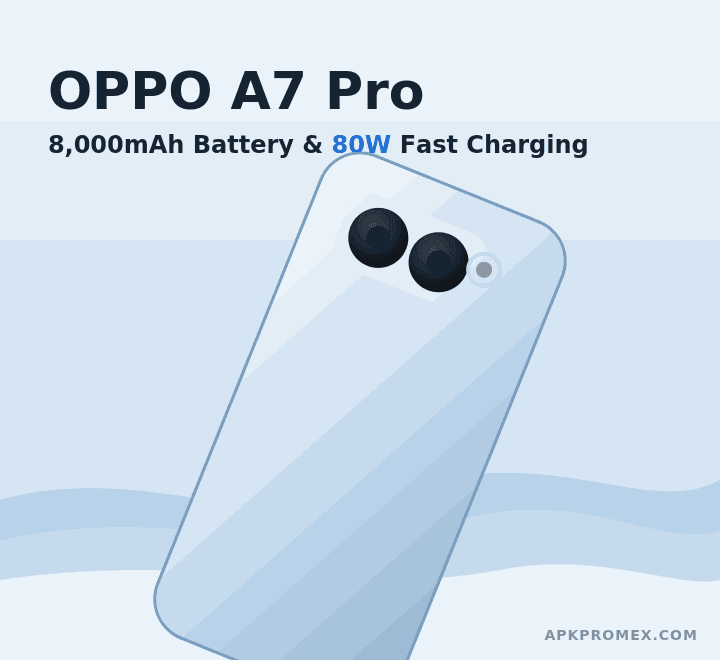
Oppo A7 Pro 8000mAh battery phone is shaping up to be one of the more interesting budget releases of the year a massive battery paired with fast charging, aimed squarely at users who want their phone to survive a full day of scrolling, streaming, and gaming without living next to a charger. Here’s a full breakdown of what’s confirmed so far, and since this is exactly the kind of phone our readers ask about an honest look at how it holds up for mobile gaming specifically.
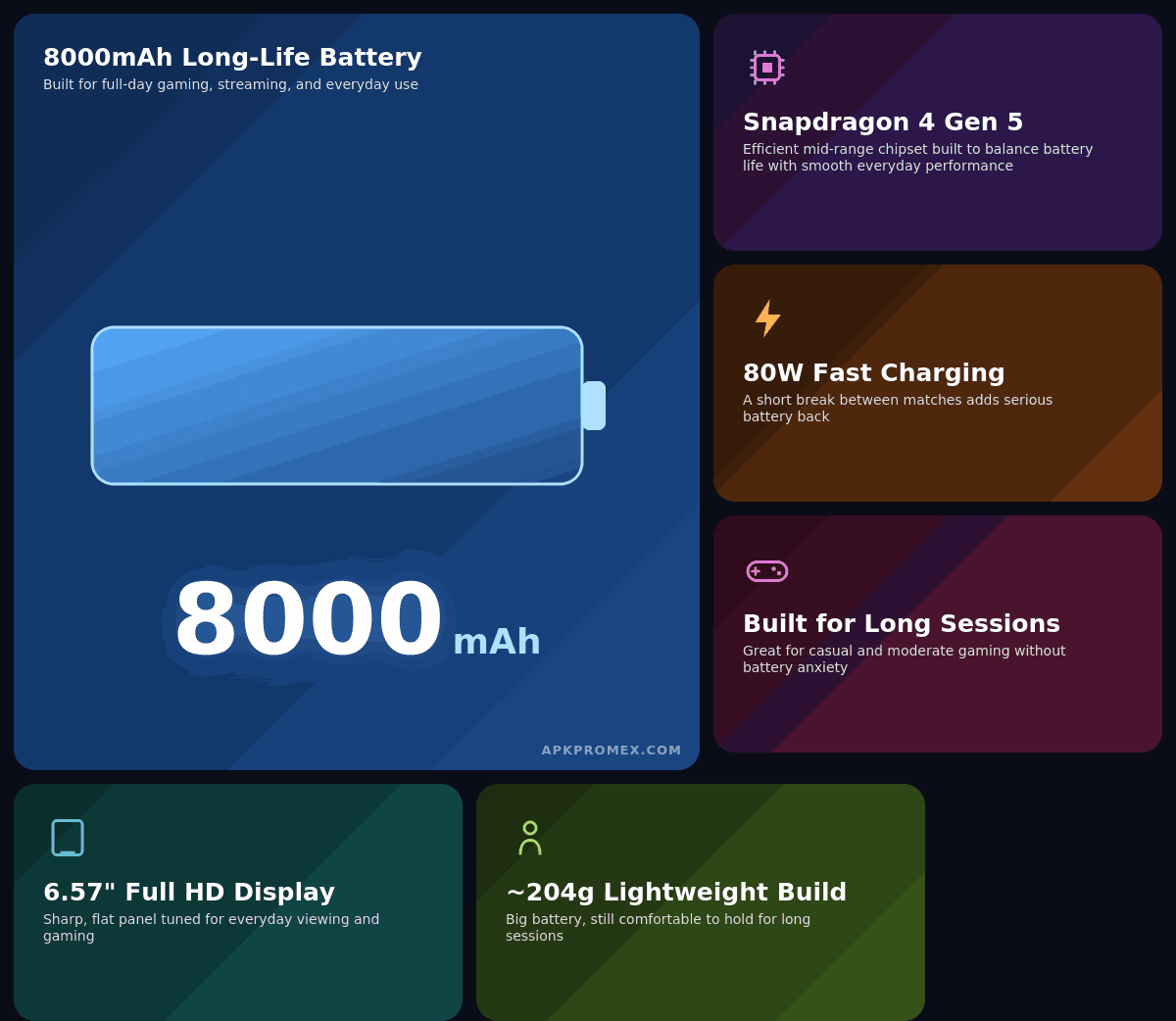
Table of Contents
A Quick Note Before We Start
Some of the specs below come from pre-launch leaks and early listings rather than a final official spec sheet. We’ve flagged anything still unconfirmed, and we’ll update this page once Oppo locks in the official release details and pricing.
Oppo A7 Pro: Key Specs at a Glance
| Spec | Detail |
|---|---|
| Battery | 8,000mAh, 80W wired fast charging |
| Display | 6.57-inch, 1080P (Full HD), flat panel |
| Chipset | Snapdragon 4 Gen 5 (expected) |
| Weight | Around 204g |
| Thickness | Around 8.8mm |
| OS | Android-based, likely ColorOS |
Display: Sharp Enough for Everyday Use
The 6.57-inch Full HD panel keeps things practical rather than flashy sharp enough for browsing, video, and most games, without pushing into the higher-resolution, higher-refresh-rate territory reserved for pricier phones. If the refresh rate lands at 90Hz or higher (as rumored for this class of device), everyday scrolling and light gaming should still feel smooth.
Performance: What the Chipset Actually Means for You
The Snapdragon 4 Gen 5 expected here is a mid-range, efficiency-focused chipset built to balance battery life with day-to-day performance rather than chase benchmark scores. In practice, that means:
- Smooth performance for everyday apps, social media, and streaming
- Capable handling of light-to-moderate mobile games , like KHAN804,356bet,TD1947 and more
- Noticeably reduced power draw compared to performance-first chipsets, which is exactly why Oppo can pair it with such a large battery without brutal charging times
Battery: The Actual Headline Feature
An 8,000mAh battery puts this phone comfortably ahead of most phones in its price range, where 5,000mAh is still the norm. Combined with 80W wired charging, the practical benefit is straightforward: significantly less time thinking about your charger, even with heavier daily use.
For context, Oppo’s larger sibling in this same generation the A7 Pro Max pushes this even further with a 10,000mAh cell, but the standard A7 Pro’s 8,000mAh is still a substantial jump over typical budget and mid-range phones.
Is the Oppo A7 Pro Good for Gaming?
This is the question that actually matters if you’re reading this on an Android gaming site so let’s be direct about it.
you can visit the site Apkpromex.com
The Good
- Battery life for long sessions. An 8,000mAh cell means you can realistically get through extended gaming sessions without your battery percentage becoming a source of anxiety.
- Fast recovery between sessions. 80W charging means even a short top-up between matches adds meaningful battery back.
- Efficient thermals. Mid-range chipsets like the Snapdragon 4 Gen 5 tend to run cooler under sustained load than flagship chips pushed to their limits, which can actually mean more comfortable extended play, even if peak performance is lower.
The Trade-Off
- This isn’t a gaming flagship chipset. Don’t expect to max out graphics settings in demanding 3D titles and get a consistently smooth frame rate. Competitive, high-refresh esports-style titles at max settings are where this chip will show its limits.
- Best suited to: casual games, turn-based and strategy titles, most 2D and stylized games, and moderate-settings play in bigger 3D titles rather than max-settings performance chasing.
Our Honest Take
If your gaming habits lean toward long play sessions of lighter or mid-weight games and you genuinely hate charging your phone multiple times a day the battery-first approach here is a legitimately good trade-off. If you’re chasing max settings in graphically demanding titles, this isn’t the chipset for that, and a phone built around a performance-first processor would serve you better.
Oppo A7 Pro vs. Oppo A7 Pro Max
| Oppo A7 Pro | Oppo A7 Pro Max | |
|---|---|---|
| Battery | 8,000mAh | 10,000mAh |
| Display | 6.57″ Full HD, flat | 6.78″ 1.5K OLED, 120Hz |
| Charging | 80W wired | 80W wired |
| Weight | ~204g | ~226g |
| Chipset | Snapdragon 4 Gen 5 (expected) | Snapdragon 4 Gen 5 |
| Cameras | Not fully confirmed | 50MP + 2MP rear, 50MP front |
The Max variant leans further into “endurance flagship” territory with a sharper, faster display and an even bigger battery, at the cost of extra weight and thickness. The standard A7 Pro looks positioned as the lighter, more pocketable option for people who still want class-leading battery life without the largest possible cell.
Price and Availability
Official pricing and a confirmed release date for the standard Oppo A7 Pro hadn’t been announced at the time of writing. Given how Oppo has positioned the Max variant, expect the standard A7 Pro to land at a lower price point once official details are confirmed we’ll update this article the moment that happens.
Frequently Asked Questions
How big is the Oppo A7 Pro’s battery?
It’s rumored at 8,000mAh, paired with 80W wired fast charging.
Is the Oppo A7 Pro good for gaming?
It handles casual and moderate gaming well, with strong battery life for long sessions, but it’s not built for max-settings performance in graphically demanding 3D titles.
What’s the difference between the Oppo A7 Pro and A7 Pro Max?
The Max variant has a larger 10,000mAh battery, a sharper 120Hz display, and confirmed camera specs, while the standard A7 Pro is lighter and expected to be more affordable.
What chipset does the Oppo A7 Pro use?
It’s expected to use the Snapdragon 4 Gen 5, a mid-range, efficiency-focused chipset.
When is the Oppo A7 Pro releasing?
An official release date hadn’t been confirmed at the time of writing this article will be updated once Oppo announces final details.
Bottom Line
The Oppo A7 Pro’s 8,000mAh battery is a genuinely strong selling point in its price class, and for anyone whose gaming habit leans toward long, casual sessions rather than competitive max-settings play, that trade-off makes real sense. Just go in with realistic expectations about the chipset this is a battery-first phone, not a performance-first one.